
■ Agentic Circuits
What goes out
must come back.
Boxes, crates, pallets, racks, kegs, containers. Inside your own sites, every one is counted. At a partner’s gate it disappears, and the only answer is to buy more.
Or start from one of these:
An AI draws your circuit as you describe it. Send it to us only if you want to.
- Your systems as they areWe read the shipments, receipts and scans they already record.
- No app for partnersWhoever receives confirms through a link, or says how many.
- A person decidesEach difference, each route, each settlement.
- EU rules in viewThe circuit keeps the records a future report will need.
Your circuit
■ Two circuits
Closed, open, or both.
Most circuits start closed and open up later. We start where yours is today.
More trips per asset, on the data you already have.
1Connect to the data you already record
Runs on its ownReads the shipments, receipts and scans your systems already record.
A person decidesWhat to share, and how: a daily file or a link to your system.
What changesNothing changes in the warehouse or in your systems. We only read.
Risk → what we doA partner that shares nothing → its count is worked out from what leaves and comes back to you.
2Match both sides of every trip
Runs on its ownPuts your records and your partner’s side by side and compares every trip.
A person decidesWhat to do with each difference, and which assets go for repair.
What changesDifferences show up the same day, not at the end of the month.
Risk → what we doA label that only names the shipment → a fixed code on each asset, as the EU rules point to.
3Assets idle past the limit
Runs on its ownWarns when assets sit past the limit, or when empties pile up at one site.
A person decidesThe number of days that is normal at each site.
What changesThe team looks only at exceptions, in one daily summary.
Risk → what we doToo many alerts → only what passes the limit, grouped.
4Empties back on the truck already going
Runs on its ownProposes how many empties go back, folded, on the next truck, based on demand at the other end.
A person decidesApproves with one tap. Once trusted, it runs on its own within limits.
What changesFewer trips just for empties, and assets where they will be needed.
Risk → what we doEmpties often travel without a transport note → every return is still counted.
5Clean, check, repair
Runs on its ownEach asset that comes back is checked in: its trips and condition update, and it goes to cleaning or repair by your rules.
A person decidesRepair or scrap, and after how many trips an asset is inspected.
What changesNo dirty or damaged asset goes back out unseen, and each asset’s life is known.
Risk → what we doDamage found late → the record shows the partner and the trip it came back from.
6Size the pool
Runs on its ownAnswers your questions, keeps the records a future report will need, and works out how many assets the work really needs.
A person decidesWhether the pilot becomes the rule, how many assets to buy, and to what specification.
What changesSpare assets start the next circuit, with nothing new to buy.
Risk → what we doA number with no basis → every figure linked to the data behind it.
Followed past the gate, moment by moment.
1Leaving for a partner
Runs on its ownReads from your system what leaves for each partner: assets, transport note, order.
A person decidesHow many assets go to each partner.
What changesEach partner’s count updates itself.
Risk → what we doAssets leaving unscanned → a warning before the truck leaves.
2Arrival, confirmed by a link
Runs on its ownWhoever receives confirms through a link, with no app: scans the assets or says how many.
A person decidesConfirms, or flags differences and damage.
What changesThe delivery is confirmed, and the partner joins the reuse system.
Risk → what we doNobody confirms → a reminder; until then the transport note counts.
3Days at the partner
Runs on its ownCounts the days at each partner and warns before the agreed deadline.
A person decidesThe acceptable deadline for each partner.
What changesIdle assets go back into circulation instead of being bought new.
Risk → what we doAssets used for someone else’s goods → each partner’s count, in view.
4Collection with deliveries
Runs on its ownMatches the deliveries going out with the empties ready at each partner, and plans the way back.
A person decidesApproves each truck’s route, or changes it.
What changesThe truck that takes goods out brings the empties back. Fewer empty trips.
Risk → what we doEmpties that turn out not to be ready → only partners that confirmed are on the route.
5The return closes the trip
Runs on its ownReads the receipt your system already records and closes each asset’s trip.
A person decidesWhich damaged assets come out of use.
What changesLosses and damage per partner, not only in total.
Risk → what we doEmpties without a transport note → the return is confirmed on receipt.
6Month close, per partner
Runs on its ownPrepares each partner’s statement: balance, trips, losses and damage. The partner confirms the balance by link.
A person decidesWhat to settle, or charge, with each partner.
What changesThe conversation with each partner happens with numbers.
Risk → what we doA figure with no agreed basis → only factors agreed with you.
When the circuit reaches customers
Scanning the code shows whoever holds the item the next step, with nothing to install. Every trip is counted.
■ One identity per item
Every asset has its own record.
Each crate, rack or keg carries a code for life. Every scan, confirmation or receipt writes the next line of its record: where it is, who holds it, how many trips it has made, and in what state.
- QR or DataMatrixEngraved or moulded in, for the asset’s whole life. Any phone reads it.
- RFID tagA full pallet read at once at the gate, without line of sight. Worth it at high volumes.
- TrackerGPS or Bluetooth, for assets worth following on the road, such as racks and stillages.
- Type and quantityWhere a code costs more than the asset: counted by type on each delivery note.
Codes can follow GS1’s identifier for returnable assets (GRAI), so a partner’s scanner can read them too.
- Where
- Store 12
- Days out
- 9 of 14
- Trips
- 37
- State
- Good
- Left the warehouse on delivery note 4471
- Arrival confirmed by Store 12, by link
- Reminder sent: 5 days left
- Back on Tuesday’s truck, already going
■ Knowledge and decisions
Your rules, written once. Your decisions, kept yours.
What the circuit knows
- Your asset types: size, cost, how each is marked and how many trips it lasts.
- Your sites and partners, and who receives at each one.
- Each partner’s terms: days allowed, what a loss costs, who pays the trip back.
- Your rules for cleaning, checks, repair and scrap.
- Your routes and calendars, so empties ride on trucks already going.
What your people decide
- How many assets to buy, of which type, and when.
- Each partner’s terms, and when to change them.
- Whether a loss is settled or charged.
- Whether a damaged asset is repaired or scrapped.
- Which routes run, and which partner joins next.
The AI proposes, with the data behind each proposal. Nothing is charged, bought or scrapped without a person’s yes.
■ Reports
The right report, before anyone asks.
- Every day
Only the exceptions
Assets past their days, deliveries nobody confirmed, empties piling up at a site.
- Every week
Where every asset is
By place and state, and how long each partner has held theirs.
- Every month
Each partner’s statement
Balance, trips, losses and damage, confirmed by the partner by link. Counts at each site against the books, with each difference explained.
- Every year
The reuse figures
Units in use and trips per type: the figures a future report will need.
■ What you measure
Before and after, in your own numbers.
- Trips per asset a yearTrips ÷ assets in the pool
- Days per round tripFrom leaving to coming back, per asset
- Days at each partnerFrom arrival to return, per partner
- Loss rateAssets lost ÷ assets in the pool, per year
- Damage and scrapAssets damaged or scrapped ÷ trips
- Assets at workAssets out or in use ÷ assets in the pool
- Returns on timeReturned within the agreed days ÷ all returns, per partner
- Count accuracyAssets counted ÷ assets on the books, per site
- Cost per tripAsset cost over its life, cleaning, transport and admin ÷ trips
- Trips only for emptiesTrucks that carry nothing but empties
- Single-use packaging avoidedTrips × the single-use packs each one replaces
- Hours on counting and chasingStaff hours, before and after
■ The sum
An idle asset asks for a new one.
Three steps. Change the numbers to yours. Example numbers
- ≈120assets go out each working day
- ≈25working days between two trips of the same asset
- +120more assets for the same work, for every extra day an asset sits idle
Add the price of one asset to see it in euros.
■ Where circuits exist
Almost anywhere goods move.
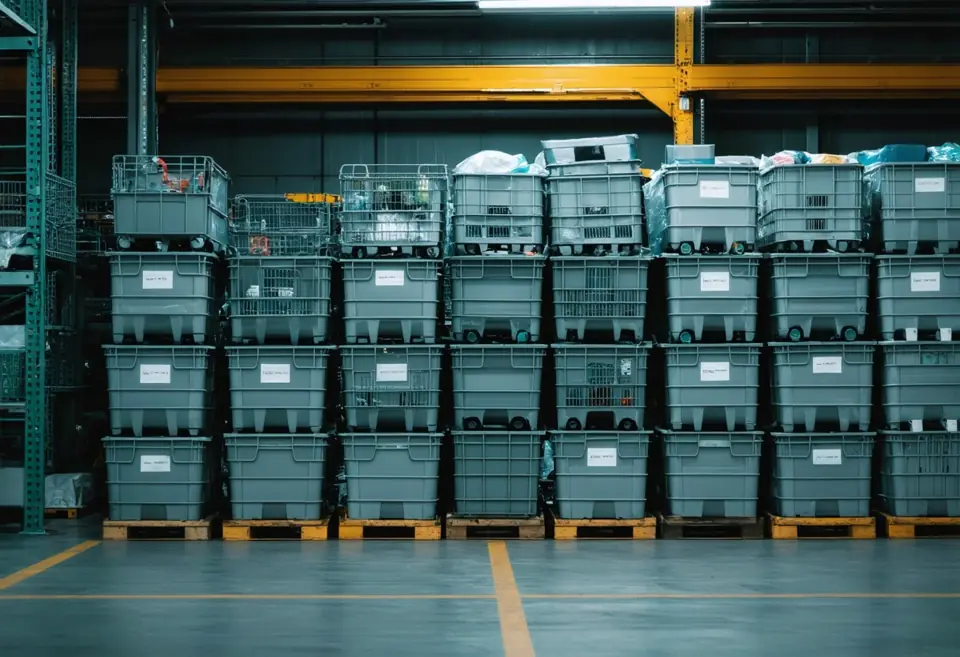
Retail and fashion
Distribution centre ↔ stores. Brand ↔ sewing workshops. Totes, crates, roll cages.
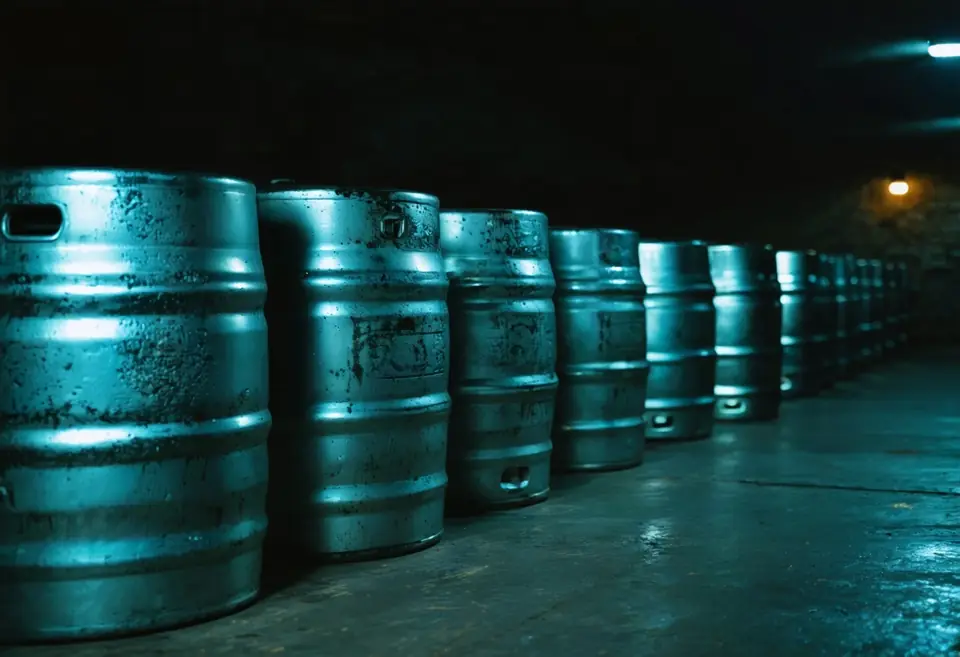
Food and drink
Suppliers ↔ restaurants and bars. Crates, kegs, containers.
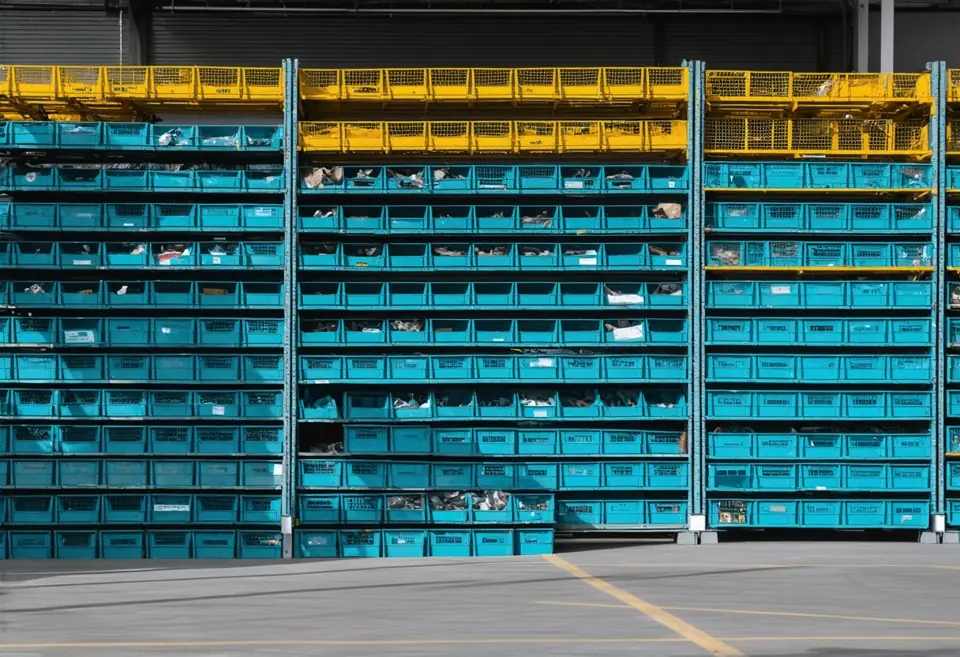
Industry and automotive
Suppliers ↔ plant. Racks, bins, special containers.
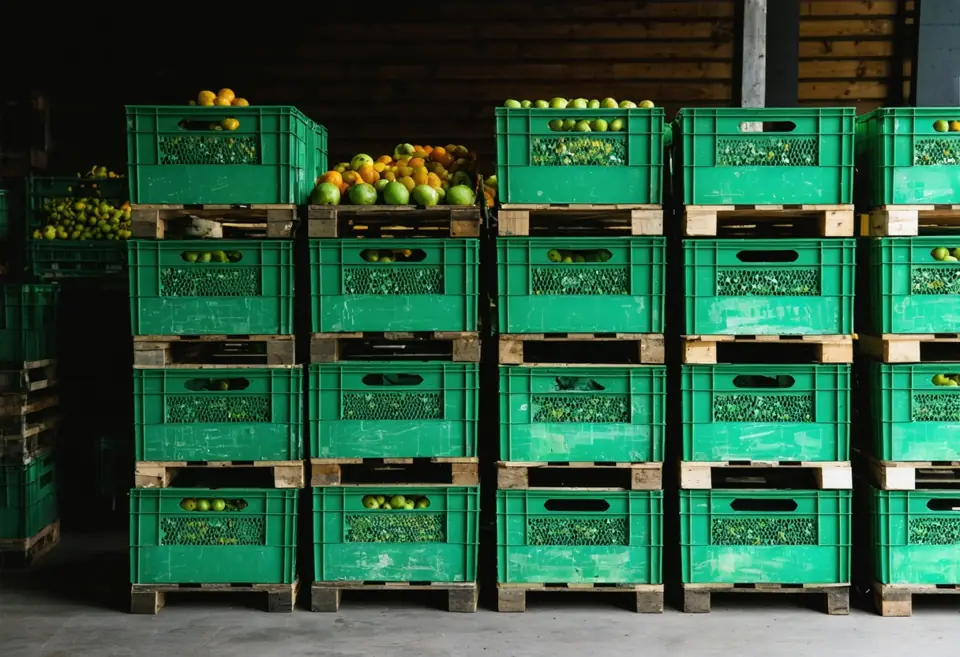
Farming
Growers ↔ packers ↔ retailers. Crates, bins, pallets.

Construction
Yard ↔ sites. Formwork, scaffolding, cable drums, big bags.
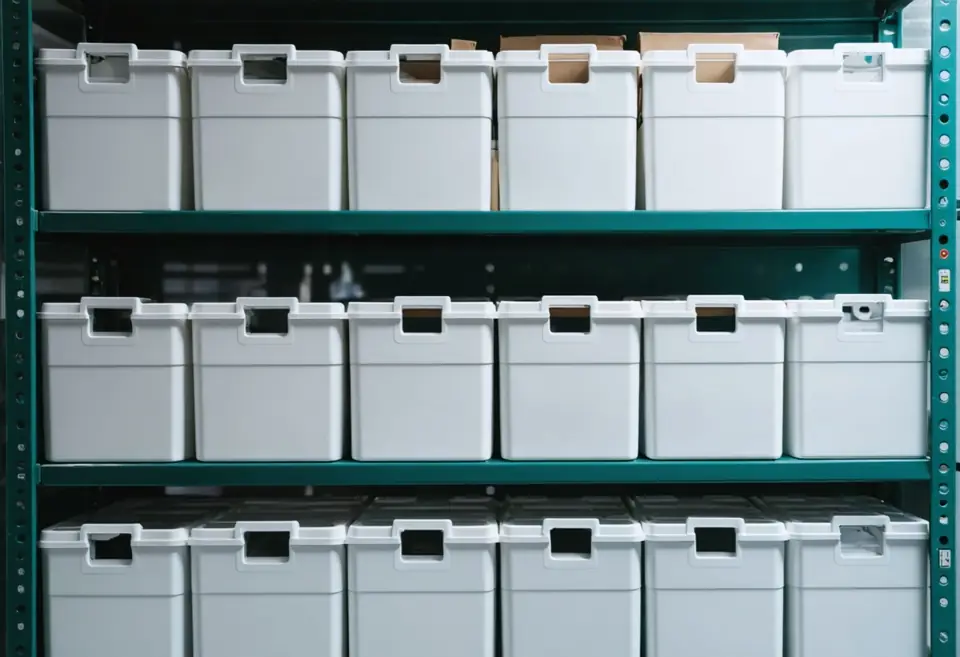
Health
Suppliers ↔ hospitals. Cold-chain boxes, sterile containers.

E-commerce
Shop ↔ customers. Reusable mailers.
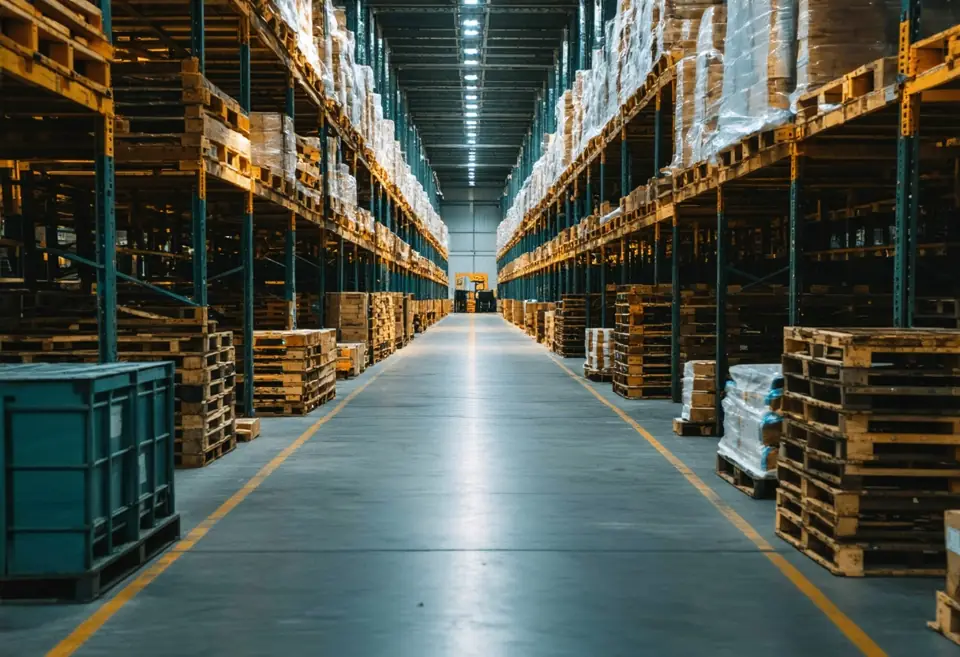
Logistics
Every party in the chain. Pallets, roll cages.
Illustrative photos.
■ The law, in short
The EU packaging rules point the same way.
Whether a rule applies to your circuit depends on what moves and between whom. What we promise: the circuit keeps the records a future report will need.
- 2026From 12 August
Reuse with rules
Reusable packaging belongs to a reuse system: rules every participant accepts for handling, collection and reconditioning, and data on the trips each type makes.
- 2027By 12 February
A minimum number of trips
The Commission sets how many trips the most used reusable formats must make.
- 2029From 12 February
A label on each package
A reusable label and a QR code that says how to reuse it. Later if the Commission’s act is late. Open circuits with no system operator are exempt.
- 2030From 1 January
Targets and a yearly report
At least 40% of transport packaging reusable, and all of it between your own sites and on deliveries to companies in the same country. Cardboard boxes and a few other cases are exempt.
- 2040From 1 January
An aim of 70%
Companies should aim for 70% of their transport packaging reusable.
Regulation (EU) 2025/40 (PPWR): articles 11, 12, 27, 29, 31 and 71, and Annex VI. A date that depends on a Commission act can move.
■ We started in reuse
Our own reusable pack, made for open circuits.
- Designed and made in Portugal
- Our own industrial steel mould
- Every box carries a laser-engraved QR code and serial number.
- We are testing an RFID tag embedded in the silicone, for contactless reading.
- Every box has its own digital record, ready, out, back or lost, and how many trips it has made.
This R&D project is financed by the PRR and Sociedade Ponto Verde.
Meet Repete
■ How we start
One circuit, one number, a few weeks.
- One numberagreed before we start: lost assets, days per round trip, trips for empties, or hours.
- 2 to 8 weeksto production, on your real data, in your daily work.
- Stop or nextonce it is measured. The next circuit is smaller work.
To start, send us a list of your assets and how they are marked today, one month of shipments and receipts, and your sites and partners.
■ Your circuit
Send us your circuit
It reaches our team as you see it here. We answer with what we would build first, and the one number we would agree with you before we start.